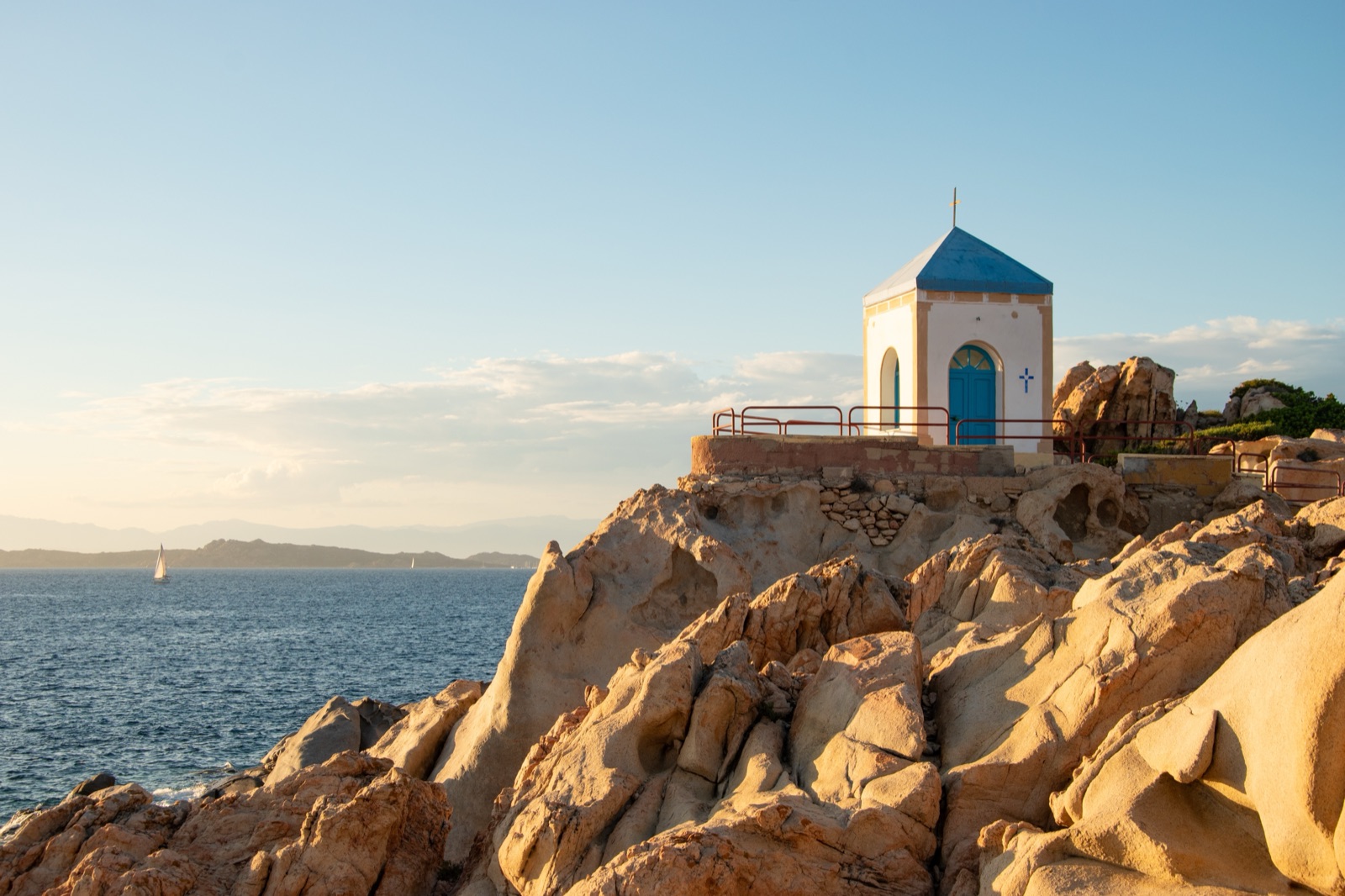
How to Get to La Maddalena: Olbia, Palau, the Ferry and Boat Trips into the Archipelago
Off the north-eastern tip of Sardinia, a scatter of granite islands rises from some of the clearest water in the Mediterranean. The La Maddalena archipelago is a national park, a working island community and one of Italy’s great boating destinations, all at once. Reaching it is easy — a short ferry ride from the Sardinian coast — but understanding how the islands fit together, where the boats leave from and what the park rules mean for visitors will help you make the most of your time.
This guide covers the journey from Olbia to Palau, the ferries to La Maddalena, getting around the main island and across to Caprera, the ports where boat trips start, and the protections that shape every visit.
The archipelago at a glance
- The archipelago has more than 60 islands and islets.
- The park covers 5,100 ha of land and 15,046 ha of sea along 180 km of coast. About 78% of the park is sea, and it is part of the sanctuary for marine mammals.
- The national park was established by Law no. 10 of 4 January 1994, and its managing body by presidential decree of 17 May 1996.
- The largest and best-known islands are La Maddalena, Caprera, Budelli, Santo Stefano and Spargi, popular with boat trips from Baja Sardinia, Palau and Santa Teresa Gallura.
La Maddalena, the main island, is where the town and the ferry from Palau are. Caprera is joined to it by a causeway; for the smaller islands, you need a boat.
Getting to Palau
By air
Ferries link La Maddalena with Palau, 40 km from Olbia; Olbia airport is just over 40 km from Palau. Olbia is the natural gateway, and the drive north to Palau is a short one.
Palau
Palau is the small port town facing La Maddalena across a narrow strait. Its harbour is the departure point for the ferries to the archipelago and for many of the boat trips around the islands. If you arrive early for a trip or a ferry, the harbour front is a pleasant place to wait, and it gives you a first view across the water to the islands you are about to explore. Leave time to find parking in summer, when the town is busy with visitors heading for the boats.
The ferry from Palau to La Maddalena
How often
The crossing is short and frequent. In Delcomar’s timetable valid from 1 June, ferries leave Palau from 06:30 until 20:00, roughly every half hour, with night crossings continuing until 04:30. Night ferries run between Palau and La Maddalena too, so you are not tied to an early return.
Tips for the ferry
- Check the current timetable; frequencies change with the season.
- Arrive a little early in summer, when foot passengers and vehicles queue for the popular crossings.
- Enjoy the view: the short crossing gives a first look at the granite islands.
Arriving in La Maddalena
The ferries dock at the edge of the town centre. The park’s main office, on Via Giulio Cesare 7, is about 200 metres from the ferry landing, a useful first stop for information about the park.
La Maddalena town
La Maddalena has 10,449 inhabitants (2026), and the town is just 2 km from the north-eastern shore of Sardinia. It is a real town, not just a resort, with a long naval history. The centre of town life is Piazza Umberto I, joined to the port by Via Garibaldi, lined with shops, restaurants and bars. Our guide to La Maddalena town and Caprera covers what to see.
Getting around the islands
La Maddalena and Caprera
La Maddalena lies 2 km from the Sardinian shore and is linked by a causeway to Caprera. That makes Caprera, with Garibaldi’s home and some of the archipelago’s most beautiful coves, easy to reach by road from the town.
Your own wheels
Having a car, scooter or bicycle on the islands makes it easy to explore the coves and viewpoints at your own pace. It is essential for one sight in particular: the Memoriale Giuseppe Garibaldi, in the Arbuticci fort built in the late 19th century, tells his life in thirteen sections over about 60 minutes; it is about four kilometres from the Compendio and reachable only by car, motorbike or bicycle.
The beaches of La Maddalena island
The island’s beaches include Bassa Trinita and Spalmatore, easy to reach from town for a swim between excursions.
The islands you reach by boat
Most of the archipelago’s famous beaches — on Spargi, Budelli, Razzoli and Santa Maria — are reached only by sea. Spargi, the archipelago’s third-largest island, can be reached only by sea; its east side has Cala Corsara, Cala Granara and Cala Ciaccaro. Visitors without their own boat join a day trip.
Where boat trips leave from
Boat trips leave from several ports on the Sardinian coast and from La Maddalena itself:
- Palau and La Maddalena: the main bases for day boats, catamarans, sailing trips and RIBs.
- Cannigione, further south along the coast, for larger cruise boats.
- Baja Sardinia and Santa Teresa Gallura, also popular departure points.
The main trips
Full-day boat trip from Palau. A day boat from Palau or La Maddalena to beaches such as Cala Corsara and Santa Maria, the clear water of Cala Coticcio, and time in La Maddalena town. About 7 hours.
Full-day cruise from Cannigione. A three-deck boat from Cannigione with a swim at Cala dell’Amore, 1.5 hours at the natural pools of Porto della Madonna and free time in La Maddalena town. About 8 hours.
Catamaran tour with lunch. A catamaran from Palau with swim stops at three islands, commentary from the captain, a look at the Pink Beach, and lunch with wine. About 7 hours.
Island-hopping sailing tour with lunch. A sailboat from La Maddalena or Palau to Spargi, Budelli and the natural pools of Budelli, with swims, snorkelling, lunch and drinks. About 6.5 hours.
Four-hour RIB tour. A fast inflatable boat from Palau or La Maddalena around the smaller islands of the marine park, with swims in the clear water. About 4 hours.
The tours page lists them all with live prices, and our guide to boat trips and beaches compares them.
Choosing a boat trip
The trips differ more than their similar names suggest. A few questions help narrow the choice.
- How long do you have? The 4-hour RIB tour fits a half day; the full-day boats, catamaran and sailing trips take 6.5 to 8 hours.
- Do you want lunch included? The catamaran includes lunch with wine, and the sailing tour includes lunch and drinks.
- Which islands matter most? For Spargi and Budelli, the sailing tour; for the natural pools of Porto della Madonna, the Cannigione cruise, with 1.5 hours there; for a look at the Pink Beach, the catamaran.
- Where are you staying? Trips leave from Palau, La Maddalena and Cannigione, so pick one near your base.
- Do you want time in town? The full-day boat from Palau and the Cannigione cruise both include time in La Maddalena town.
The park rules that affect visitors
Boats and permits
The park manages its waters carefully. Since summer 1999 the park has charged a ticket to private boaters, passenger boats, dive centres and divers. If you hire a boat, boaters need a park permit to navigate, moor, anchor or stop within 300 m of the coast; kayaks, pedalos and windsurf boards are exempt. On an organised trip, the operator handles this.
No-go zones
In the zones of full marine protection, navigation, anchoring, swimming and fishing are forbidden; the Pink Beach is an example. The beach is in the park’s zone of full protection, and since 1994 access, transit, stopping and bathing have been forbidden; it can be admired only from the sea.
Guided-only coves on Caprera
Two of the most beautiful coves can be visited on foot only with a guide. Cala Coticcio and Cala Brigantina on Caprera lie in highly protected zones and can be reached on foot only with a licensed environmental hiking guide. Each visitor also pays a €3.00 environmental contribution to the park (children up to 12 are exempt), separate from the guide’s fee and not refunded if the walk is cancelled.
A little history on arrival
La Maddalena’s position has always mattered more than its size.
- Names. The Romans called the island Ilva, Fussa and Bucina; it took the name Santa Maria Magdalena in the 16th century.
- The town is born. In 1767 the Savoy-Piedmontese occupied the island, and the present town grew from then.
- Napoleon. In 1793 a French expedition including Napoleon Bonaparte tried and failed to take the island; it was his first combat experience.
- Nelson. During the Napoleonic Wars, Nelson used the archipelago as a base for his fleet.
- The navy. The Italian Royal Navy established a base here in 1887, and the navy has shaped the town ever since.
- A famous prisoner. In 1943 Mussolini was briefly held prisoner at Villa Webber, from 7 to 27 August.
- Garibaldi. On Caprera, Garibaldi lived at the Compendio from 1856 to 1882.
Nature you will see
The park protects a rich natural world, much of it visible from the ferry and the boats.
- Plants: the islands are covered in Mediterranean scrub of myrtle, juniper, strawberry tree, lentisk, helichrysum, heather, broom and rock rose.
- Animals: more than 110 species of land vertebrates and some 500 marine species live in the park, including the strictly protected dusky grouper.
- Birds: seabirds include Scopoli’s shearwater, Audouin’s gull, yellow-legged gull, storm petrel and shag.
- Caprera’s goats: Caprera has a population of wild goats of unknown origin, genetically distinct from Sardinian goats.
When to go
- Summer is the classic season for boat trips, with the calmest seas and warmest water. It is also the busiest time, so book trips and the Garibaldi museums ahead.
- Late spring and early autumn are quieter, with more space on the beaches; check which boat trips are running on your dates.
- Out of season, the ferries keep running, the town returns to its own rhythm, and walking on Caprera is at its best. Check museum hours: from 26 October 2026 the Memoriale opens only in the morning, 8:30–13:45, last entry 13:00.
- Festivals: the patron saint’s feast is on 22 July, one of the busiest days in town.
Budgeting for your visit
- The ferry from Palau is the one unavoidable cost of reaching the island.
- Boat trips range from the 4-hour RIB tour to full days with lunch included.
- The Garibaldi museums: tickets for the Compendio cost €8.00 (reduced €2.00); a combined ticket with the Memoriale costs €13.00.
- Cala Coticcio: the guide’s fee plus a €3.00 environmental contribution to the park.
Where to stay
The choice is between staying on the island, in La Maddalena town, and staying on the Sardinian coast, in Palau or further along. The town puts you close to the restaurants, the causeway to Caprera and the boats that leave from La Maddalena; Palau makes it easy to combine the archipelago with the rest of the Gallura coast and to catch the trips that leave from the mainland side.
Sample plans
A day trip from Olbia
- Morning: drive or transfer to Palau and join a full-day boat trip from the harbour.
- Day: swim stops at Spargi and the islands, and a look at the Pink Beach from the water.
- Afternoon: time in La Maddalena town on the trips that include it.
- Evening: back to Palau and Olbia.
Two or three days on La Maddalena
- Day one: ferry from Palau, settle in town, and an afternoon swim at Bassa Trinita or Spalmatore.
- Day two: a full-day boat trip or sailing tour around the outer islands.
- Day three: across the causeway to Caprera for Garibaldi’s home and the Memoriale, and a guided walk to Cala Coticcio.
Practical tips
- Book boat trips ahead in July and August, when the best ones fill up.
- Take the early ferry if you are going to Caprera for the day.
- Bring cash and cards; you will pay for the ferry, trips and park contributions.
- Pack swimwear, sun protection and water for every boat day.
- Respect the protected zones: the Pink Beach is seen only from the sea.
- Book the Garibaldi museums in advance: booking is strongly recommended for the Garibaldi museums.
With children
The archipelago suits families well: short ferry crossings, calm swimming spots and boats that stop at the beaches. On boat trips, check that the operator has children’s life jackets, and choose shorter outings, such as the 4-hour RIB tour, for younger children. For the guided walk to Cala Coticcio, children up to 12 are exempt from the €3.00 park contribution.
Accessibility
The short ferry from Palau is usually the easiest part of the journey; ask the crew if you need help boarding. On the island, the town centre around the port is compact. Boat trips vary: larger catamarans and cruise boats are easier to board than sailing boats and RIBs, and swim stops usually mean climbing down a ladder into the sea, so ask the operator before booking. The guided walks to Cala Coticcio and Cala Brigantina are on rough paths.
Frequently asked questions
How do I get to La Maddalena?
Fly or sail to Olbia, travel just over 40 km north to Palau, and take the ferry across to La Maddalena. Ferries run roughly every half hour from 06:30 until 20:00 in summer, with night crossings too.
How far is La Maddalena from Olbia?
Palau, the ferry port for La Maddalena, is 40 km from Olbia, and Olbia airport is just over 40 km from Palau.
Can I drive to Caprera?
Yes. Caprera is linked to La Maddalena by a causeway.
Can I visit the Pink Beach?
Only from the sea. Since 1994, access, transit, stopping and bathing on the beach have been forbidden; boats may pass slowly up to the buoys about 70 m from shore.
Do I need a permit to visit the park?
Not as a ferry or boat-trip passenger; operators handle the park ticket. Boaters need a park permit to navigate, moor or anchor within 300 m of the coast.